
Modern texting is filled with abbreviations that save time but often create confusion. One moment you receive a quick message like “I’m on DND,” and suddenly you’re unsure whether the person is busy, ignoring messages, or referring to something completely different. This kind of ambiguity is common in digital communication, where short forms carry meaning that depends heavily on context.
Understanding what DND mean in text situations requires more than simply translating letters into words. The abbreviation can signal boundaries, availability, or even refer to a hobby depending on where it appears. In casual conversations, it usually indicates that someone does not want to be interrupted. On certain platforms or communities, however, it can have alternative meanings.
Because texting relies on speed and subtle social cues, abbreviations like DND function as compact signals of status and intention. Learning how they work helps you interpret conversations accurately and respond appropriately.
Quick Answer Box
| Abbreviation | DND |
|---|---|
| Most Common Meaning | Do Not Disturb |
| Other Meanings | Dungeons & Dragons, Do Not Disclose |
| Tone | Informational, boundary-setting, sometimes casual |
| Commonly Used On | Text messages, Snapchat, Discord, Instagram |
| Safe For Work | Yes, in most contexts |
| Quick Tip | Usually means someone doesn’t want notifications or interruptions |
What Does DND Mean In Text?
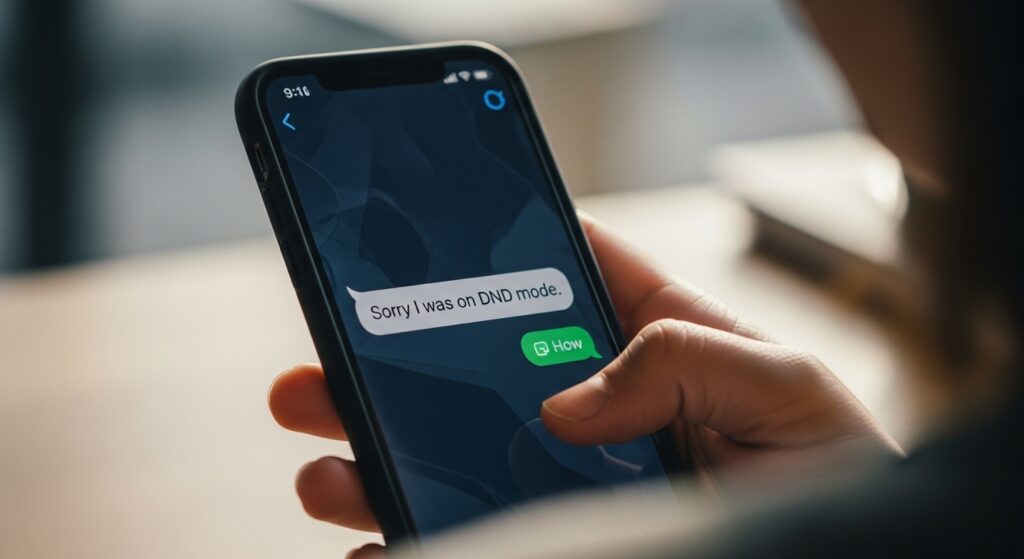
DND stands for “Do Not Disturb.” In texting and online communication, it functions as a short status signal telling others that someone does not want to be interrupted for a period of time.
From a linguistic perspective, DND is an initialism, meaning each letter represents the first letter of a phrase. In digital communication, these compressed forms help reduce typing effort while still conveying a clear social message.
Semantically, the core meaning of DND revolves around temporary unavailability. It signals that the person may be busy, resting, studying, working, or simply avoiding notifications. Because texting often lacks tone or body language, abbreviations like this help encode social boundaries quickly.
The meaning of DND can vary depending on context. In everyday texting, it usually relates to phone notification settings or personal availability. In certain online communities, however, the same abbreviation can refer to something completely different.
Due to the global nature of internet culture and messaging apps, DND has spread widely across platforms, becoming a common shorthand for setting communication boundaries.
Most Common DND Meaning In Text
The most common meaning of DND in texting is “Do Not Disturb,” indicating someone does not want to be interrupted or contacted at the moment.
This meaning usually appears when someone is focusing on work, studying, sleeping, or needing quiet time. The conversational trigger often happens when someone wants to explain delayed responses or signal limited availability.
Example:
“I’m putting my phone on DND while I study tonight.”
In this situation, the abbreviation communicates a boundary while still maintaining social courtesy. Instead of ignoring messages silently, the sender signals that responses may be delayed.
Socially, it signals respectful unavailability, not rejection.
Common DND Meaning
Another common meaning of DND appears in gaming and hobby communities, where it refers to Dungeons & Dragons, the tabletop role-playing game.
This usage appears when people discuss gaming sessions or hobbies.
Example:
“We’re playing DND tonight at 8 if you want to join.”
In this context, the abbreviation is not about phone notifications but about the well-known fantasy game.
Less Common DND Meaning
In some professional or privacy-focused discussions, DND may mean “Do Not Disclose.”
This usage appears when someone is discussing confidential information or requesting privacy.
Example:
“Please mark the client name as DND in the report.”
Here the abbreviation signals that certain details should remain confidential.
Rare DND Meaning
In rare technical or scheduling contexts, DND may simply refer to a device notification setting rather than a conversational message.
Example:
“My phone automatically goes into DND after midnight.”
This version refers to a system feature rather than social communication.
Origin And Evolution Of DND
The phrase “Do Not Disturb” existed long before texting. It originally appeared on hotel room signs, signaling that guests did not want housekeeping or interruptions.
With the rise of smartphones, operating systems introduced Do Not Disturb modes, allowing users to silence calls and notifications. As people discussed these settings in messages, the phrase naturally shortened to DND.
Because texting rewards speed and efficiency, the abbreviation quickly became normalized in casual conversation. It eventually expanded beyond device settings into general digital culture.
Today, DND functions as both a technical feature and a social signal, showing how language evolves alongside technology.
Psychological And Emotional Meaning Of DND
When someone uses DND in conversation, it often communicates more than simple unavailability. Psychologically, it signals a desire for control over attention and boundaries.
Modern digital communication creates constant notification pressure. Messages, alerts, and calls can interrupt concentration or rest. Saying “I’m on DND” helps people reclaim focus without appearing rude.
Emotionally, the phrase can signal several intentions:
- needing quiet or rest
- focusing on work or study
- protecting personal space
- avoiding distractions
Because of this, the abbreviation often carries a self-care undertone, indicating that the person is managing their time or energy.
Communication Function Of DND
In conversation, DND acts as a status indicator rather than a typical message.
Instead of explaining a long reason for delayed replies, people simply state that they are on DND. This communicates availability instantly.
Example conversational use:
“I might reply late tonight, my phone’s on DND.”
The function is efficient because it:
- prevents misunderstandings
- explains delayed responses
- signals temporary boundaries
In this way, DND helps maintain politeness while reducing communication pressure.
Cultural And Generational Context Of DND
Younger digital users tend to understand DND instantly because smartphone settings and online abbreviations are part of everyday life.
For older users, however, the abbreviation may initially seem unclear unless they are familiar with phone notification features.
Culturally, the abbreviation reflects a broader shift toward managing digital overload. As people receive more messages and notifications than ever before, phrases like DND help communicate availability without conflict.
This cultural shift shows how language adapts to new communication environments.
Why DND Became Popular
Several factors explain the rapid popularity of DND in digital communication.
First, smartphones introduced a widely recognized feature called “Do Not Disturb.” Because millions of users saw the setting on their devices, the abbreviation quickly became recognizable.
Second, texting encourages efficiency. Writing three letters is faster than typing the entire phrase.
Third, the abbreviation solves a common social problem: explaining delayed replies without sounding dismissive.
Because it is short, neutral, and widely understood, DND became a convenient shorthand for digital availability.
Semantic Core Meaning Of DND
At its core, DND communicates temporary unavailability or interruption control.
Whether referring to a phone setting or a personal boundary, the abbreviation signals that someone wants fewer interruptions for a specific period.
The core semantic idea is not rejection or avoidance. Instead, it expresses controlled access to attention, which has become an important part of modern communication.
Most Common DND Meaning In Text (Deep Dive)

What It Means
When used in texting, DND usually means the person has activated “Do Not Disturb” or intends to avoid interruptions.
The tone is typically neutral and practical. It does not imply anger or disinterest. Instead, it communicates that the person is temporarily unavailable.
Example message:
“My phone’s on DND while I’m working.”
The phrase explains why responses may be delayed.
Typical Use Cases
Studying Or Working
Situation: Someone wants uninterrupted focus.
Why slang is used: It quickly explains reduced availability.
Example:
“I’ll reply later, phone’s on DND while I finish this project.”
Sleeping Or Resting
Situation: Someone is going to sleep and does not want notifications.
Why slang is used: It communicates boundaries without a long explanation.
Example:
“Going to bed, putting my phone on DND.”
Meetings Or Classes
Situation: A person cannot answer messages during an event.
Why slang is used: It signals temporary silence politely.
Example:
“In a meeting right now, DND for the next hour.”
Examples In Different Tones
“I’m putting my phone on DND while I finish this assignment.”
“Sorry if I reply slow, I’m on DND tonight.”
“DND for a bit, trying to focus.”
“My phone goes into DND automatically after midnight.”
“I turned DND on so I don’t get distracted.”
What It Can Sound Like
Responsible
It sounds responsible when someone uses it to manage work or study time.
Example:
“I’m on DND until my exam is over.”
Respectful
It sounds respectful when explaining delayed replies.
Example:
“Sorry for the late reply, my phone was on DND.”
Brief Or Efficient
Sometimes it simply sounds efficient because the sender wants to keep the message short.
Example:
“DND for a bit, talk later.”
Meaning Based On Context
The meaning of DND stays relatively consistent, but tone can shift depending on context and wording.
Positive Use
Positive use appears when someone responsibly manages their time.
Example:
“I’m putting my phone on DND so I can focus on studying.”
The tone suggests discipline and productivity.
Neutral Use
Neutral use simply informs others about availability.
Example:
“My phone’s on DND tonight, I’ll check messages in the morning.”
Here it functions as a simple status update.
Negative Or Critical Use
Rarely, DND may appear slightly dismissive if used abruptly.
Example:
“DND. Busy.”
In this situation the tone may feel short or distant.
Dry Or Rushed Use
If someone writes only “DND,” the message may sound abrupt because it lacks context.
Example:
“DND right now.”
Adding explanation usually softens the tone.
How DND Is Used In Real Conversations
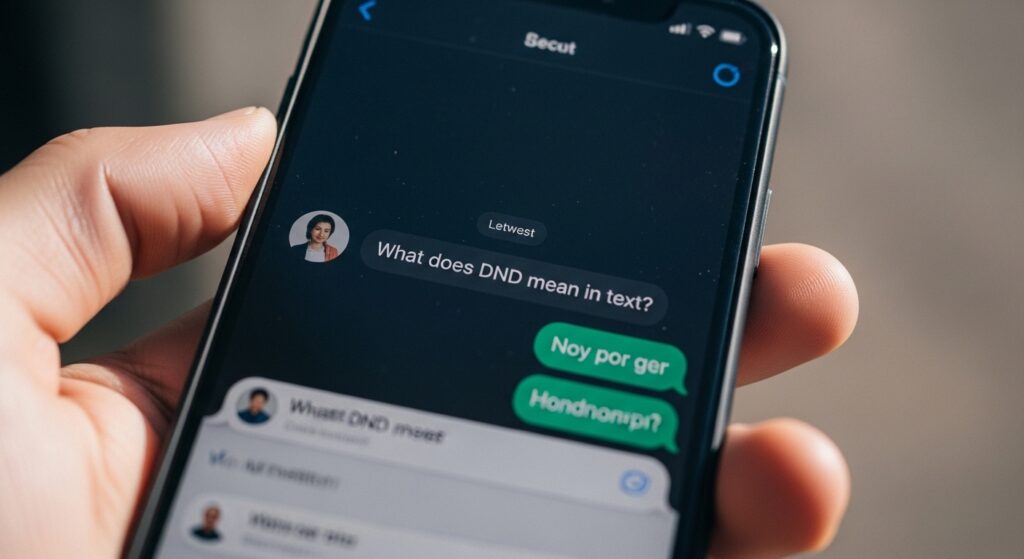
DND often appears in quick conversational exchanges where someone needs to explain limited availability.
Understanding Or Clarifying
Situation: Someone explains why replies might be delayed.
Example:
“I might not answer quickly tonight because my phone’s on DND.”
Reacting Or Labeling
Situation: Someone comments on their own notification settings.
Example:
“I had my phone on DND so I didn’t see your message earlier.”
Social Or Dating Context
Situation: Someone signals they are focusing on personal time.
Example:
“I’m putting my phone on DND for the evening, talk tomorrow.”
Group Or Online Context
Situation: A person explains why they were absent from a chat.
Example:
“Sorry I missed the messages, my phone was on DND.”
Gaming Context (If Relevant)
Situation: In gaming groups, DND may refer to the tabletop game.
Example:
“We’re starting our DND campaign tonight.”
Socially, listeners interpret the abbreviation based on the surrounding conversation.
DND Meaning On Different Platforms
DND Meaning On Snapchat
On Snapchat, DND usually refers to a notification setting or a temporary break from messaging.
Example:
“Sorry if I don’t respond fast, I have Snapchat on DND.”
DND Meaning On TikTok
On TikTok, creators sometimes mention DND when discussing productivity or digital boundaries.
Example:
“I turn on DND when filming so notifications don’t interrupt.”
DND Meaning On Instagram
On Instagram, it may appear in captions or direct messages explaining why someone is offline.
Example:
“My phone was on DND so I didn’t see your DM earlier.”
DND Meaning In Texting Or Messaging
In texting apps, the abbreviation most commonly explains delayed responses.
Example:
“I had DND on during my meeting.”
DND Meaning On Discord Or Communities
In Discord communities, DND may also appear as a status indicator showing someone is unavailable.
Example:
“His Discord status is DND so he’s probably busy.”
Capitalization usually does not change meaning, but all-caps may appear more formal or technical.
When To Use Vs When To Avoid DND
When To Use
Use DND when you want to explain limited availability politely.
Example:
“My phone will be on DND while I study tonight.”
This helps prevent misunderstandings.
When To Avoid
Avoid using DND when the audience may not recognize the abbreviation.
Example:
In professional emails, writing “I’m on DND” may confuse some readers.
Professional And Safe Alternatives
Alternatives can clarify the message in formal settings.
Examples:
“I’ll respond later because notifications are turned off.”
“I’m currently unavailable but will reply soon.”
Hidden Or Risky Meanings Of DND
DND rarely carries offensive meaning, but misunderstandings can occur if someone interprets it as ignoring messages.
Example risk:
“Why are you on DND all day?”
The phrase may appear dismissive if used repeatedly without explanation.
Clear communication usually prevents these misunderstandings.
Variations And Forms Of DND
On DND
Used to describe the phone status.
Example:
“My phone’s on DND tonight.”
Put On DND
Used when someone activates the setting.
Example:
“I put my phone on DND while studying.”
DND Mode
Used when discussing phone features.
Example:
“DND mode stops notifications while I sleep.”
DND Vs Similar Slang
DND vs BRB
BRB means “Be Right Back,” suggesting short absence.
DND indicates limited notifications or interruptions.
Example:
“BRB, grabbing food.”
“DND while I study.”
DND vs AFK
AFK means “Away From Keyboard.”
DND focuses on notification silence.
Example:
“AFK for a few minutes.”
“Phone on DND.”
How To Decode The Correct Meaning
- Look at the conversation topic.
- Identify whether the discussion is about availability or gaming.
- Consider the platform being used.
- Check surrounding sentences for clues.
- Ask for clarification if the meaning remains unclear.
How To Respond To DND
Casual Replies
“No problem, talk later.”
“Alright, message me when you’re free.”
Friendly Replies
“Good luck with your work, text when you’re done.”
“Hope your study session goes well.”
Mature Or Respectful Replies
“Understood, take your time.”
“Thanks for letting me know.”
Boundary Or Privacy Responses
“That’s fine, we can talk tomorrow.”
“Reach out when you’re available.”
Common Misunderstandings About DND
Some people assume DND means someone is ignoring messages permanently. In reality, the abbreviation usually signals temporary unavailability, not rejection.
Another misunderstanding occurs when gaming communities use DND to mean “Dungeons & Dragons.” Without context, this can confuse readers.
Recognizing surrounding conversation clues helps avoid these misunderstandings.
Regional And Cultural Usage Of DND
DND is widely used in English-speaking digital environments, especially where smartphone features are common.
However, the abbreviation can appear globally because messaging platforms standardize features like “Do Not Disturb.” As a result, even non-native English speakers often recognize the abbreviation in online conversations.
Read: FN Meaning in Text
Read: DTM Meaning in Text
Read: What Does IDT Mean in Text
Read: FN Meaning in Slang
Read: What Does GNG Mean
Frequently Asked Questions
What Does DND Mean In Text Messages?
In most texting situations, DND means “Do Not Disturb,” indicating that someone has silenced notifications or prefers not to be interrupted temporarily.
Is DND Rude In Texting?
No. When explained clearly, it usually signals respectful boundaries rather than ignoring someone.
Does DND Mean Someone Is Ignoring You?
Not necessarily. It typically means the person has limited notifications or is focusing on something important.
Can DND Mean Dungeons And Dragons?
Yes. In gaming communities, DND often refers to the tabletop role-playing game Dungeons & Dragons.
Is DND Safe For Work?
Yes. The abbreviation is generally neutral and acceptable in most casual or professional contexts.
Why Do People Say DND In Messages?
People use it to quickly explain why they might respond slowly or why notifications are turned off.
Conclusion
Understanding what DND mean in text communication helps prevent confusion in everyday messaging. In most conversations, the abbreviation stands for “Do Not Disturb,” signaling that someone wants fewer interruptions or may reply later. The phrase functions as a digital boundary marker, allowing people to manage attention without sounding rude.
Although the abbreviation can occasionally refer to hobbies like Dungeons & Dragons or privacy instructions such as “Do Not Disclose,” the meaning is usually clear from context. Recognizing tone, platform, and surrounding conversation makes it easier to interpret correctly. As texting continues to favor speed and efficiency, abbreviations like DND remain a practical way to communicate availability while maintaining polite and clear interactions.
